

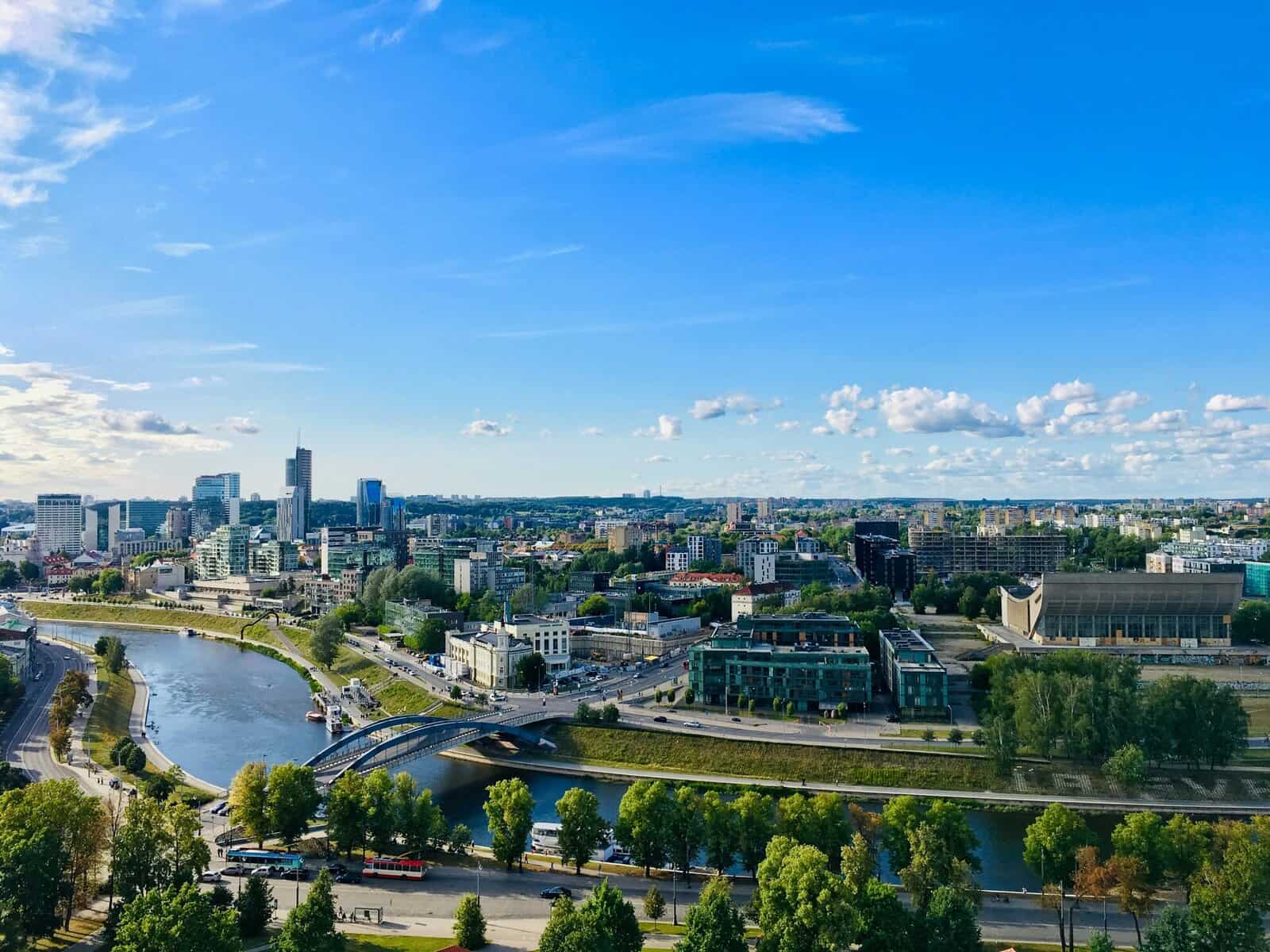
Venture markets across Europe have been uneven, but the Baltics have started to stand out again – not just for how much capital is flowing in, but for how it’s being deployed. Recent market tracking indicates that investment is concentrating into fewer, larger rounds, and increasingly backing founders with deeper operating experience. That pattern matters because it’s one of the clearest signs an ecosystem is moving from “startup density” to “scale readiness.”
For companies looking at internationalisation into Central and Eastern Europe, this shift changes the opportunity. The Baltics are no longer only a place to find early-stage experimentation. They’re becoming a practical platform for building, partnering, acquiring, and launching into wider European and global markets – especially in sectors where regulation, security, and infrastructure shape competitive advantage.
What’s really driving the surge
The most important story isn’t the year-on-year increase in funding. It’s the underlying reallocation: capital is moving toward businesses where global relevance is clearer, and where execution risk is lower.
First, sector focus is sharpening
Funding has concentrated heavily around AI, alongside a rising share for defence, energy, and infrastructure-oriented plays. In many ecosystems, this kind of thematic clustering happens when founders and investors stop chasing “what’s hot” and start building repeatable advantage – talent, research links, procurement pathways, and specialist networks that compound over time.
Second, founder profiles are maturing
The ecosystem increasingly rewards teams that have built before, led teams before, and can credibly explain why they have an edge in the problem they’re solving. In practical terms, that shifts the market from “idea capital” to “execution capital.” It also tends to improve the quality of partnerships for corporates, because the startups that rise to the top are more likely to have enterprise-grade product discipline, security posture, and implementation capability.
Third, the market is gaining stronger institutional support
Alongside larger rounds, there are signs of renewed capacity among regional funds, with more capital available for follow-on financing and fewer “orphaned” companies stuck between seed and Series A. In smaller ecosystems, that matters as much as total funding volumes – because the ability to bridge rounds determines whether startups can scale locally or are forced to relocate prematurely.
Fourth, community infrastructure is becoming a growth engine
The rise of structured founder communities – hacker houses, builder programs, and frequent hackathons – does more than create new companies. It shortens the cycle from idea to prototype, builds founder density faster, and surfaces talent that would never self-identify as “startup material.” Over time, those communities become a durable pipeline that reduces reliance on a small elite circle of repeat founders.
Why this matters for internationalisation strategy
For international companies, the Baltics have often been framed as a cost-efficient talent base or a digitally advanced operating environment. Those strengths still hold, but the funding surge points to something more valuable: the region is increasingly producing category-relevant companies in areas that align with enterprise demand and public-sector priorities.
That creates three internationalisation pathways worth taking seriously.
1) The Baltics as an “innovation wedge” into regulated and infrastructure-heavy markets
AI is not a monolith. The most defensible AI businesses are often built in domains where data is sensitive, workflows are sticky, and the buyer cares about security and compliance as much as performance. Defence, critical infrastructure, and energy are precisely those domains.
For international firms – especially in industrials, mobility, security, telecoms, and public services – the Baltic ecosystem can act as a wedge into innovation that is difficult to source elsewhere. Not because the ideas are better, but because the ecosystem is becoming increasingly oriented around building products that can survive real scrutiny.
2) The Baltics as a partnership and acquisition pipeline
As exits and later-stage rounds increase, corporate development teams should expect a larger pool of companies that are “buyable”: clear IP, strong teams, and enterprise-ready roadmaps. The strategic opportunity is to move earlier than competitors – before a company becomes a global auction.
The practical shift is to treat the Baltics not as a scouting trip, but as a repeatable pipeline:
- establish a small set of thematic priorities (e.g., AI for ops, cybersecurity, industrial automation, defence-adjacent tech),
- build relationships with a narrow set of funds and founder communities,
- and create a clear internal process to pilot, procure, and partner quickly.
3) The Baltics as a launchpad for pan-European scaling
Internationalisation is often framed as “enter a market.” But for startups, the reality is “enter a region while selling globally.” The Baltics’ small domestic markets force that discipline early – product teams learn to sell beyond borders because they have to.
For international firms building new products or business lines, that mindset is useful. It pushes teams toward global distribution thinking from day one: pricing, language, compliance, and channel design that work across borders rather than being rebuilt later.
The hidden advantage: speed with governance
One of the most underestimated advantages in high-growth ecosystems is the ability to move fast without breaking trust. As investment concentrates into AI, defence, and infrastructure, governance becomes a differentiator – data protection, security, supply chain integrity, and resilience.
The Baltics’ momentum suggests the ecosystem is getting better at balancing:
- speed (fast iteration, rapid prototyping, lean teams), and
- credibility (enterprise-grade requirements, procurement readiness, and compliance discipline).
That combination is exactly what international partners look for when they want innovation that can ship – not just demos that impress.
What leaders should do next: a practical playbook
If you’re building an internationalisation plan that involves the Baltics, the goal is not to “be present.” The goal is to capture advantage through focus and repeatability.
For corporates expanding into the region
- Choose a specific strategic role for the Baltics. Talent hub, product build center, innovation partnership pipeline, acquisition scouting, or regional HQ – each requires a different footprint and governance model.
- Build a partner map, not a country map. The most valuable entry points are often funds, founder communities, accelerators, and sector-specific networks rather than traditional institutions.
- Design a fast procurement and pilot lane. Most corporate-startup partnerships fail due to timing mismatch, not intent mismatch. A lightweight contracting and onboarding path is often the biggest unlock.
For investors and corporate venture teams
- Track sector clustering, not headline volume. The strongest signal is where capital repeatedly concentrates and where follow-on financing becomes reliable.
- Watch for operational maturity. Repeat founders, domain-expert leadership, and early enterprise traction tend to correlate with lower “translation risk” when scaling internationally.
- Treat community infrastructure as deal flow. The best early signals increasingly emerge from builder communities rather than formal demo days.
For startups scaling out of the Baltics
- Lean into global distribution early. Small home markets are an advantage only if they push you to build international go-to-market muscle quickly.
- Turn governance into a selling point. In AI and regulated domains, credibility compounds: security posture, data discipline, and compliance readiness win deals.
- Build a deliberate path to follow-on capital. The funding environment rewards quality, but international investors still expect a clear narrative on how you bridge to later rounds.
Bottom line
The Baltic funding surge is not just cyclical recovery. It reflects an ecosystem that is increasingly confident in what it wants to build – and increasingly credible in building companies that matter beyond the region. For internationalisation leaders, that creates a timely opportunity: use the Baltics not only as a place to enter, but as a platform to scale – through talent, partnerships, and a growing pipeline of globally relevant ventures.